Low cost lawn repair case study real UK garden: a practical budget revival that actually worked
If your lawn looks patchy, tired, compacted, or just plain embarrassed by itself, you are not alone. A low cost lawn repair case study real UK garden is useful because it shows what can be done without ripping everything out and starting again. In a typical British garden, the problems are rarely dramatic on their own. It is usually a mix of thin grass, moss, shade, dog wear, poor drainage, and a few too many winter leftovers. The good news? With the right order of work, you can often improve a lawn on a sensible budget.
This article walks through how a budget-friendly lawn repair approach works in a real UK garden setting, what makes it worth doing, where people waste money, and how to judge whether you should tackle it yourself or bring in help. We will keep it grounded, practical, and honest. No glossy nonsense. Just the stuff that tends to make a visible difference.
Table of Contents
- Why low cost lawn repair matters
- How the repair process works
- Key benefits and practical advantages
- Who this is for and when it makes sense
- Step-by-step guidance
- Expert tips for better results
- Common mistakes to avoid
- Tools, resources and recommendations
- Law, compliance, standards and best practice
- Options, methods and comparison table
- Case study or real-world example
- Practical checklist
- Conclusion
- Frequently asked questions
Why Low cost lawn repair case study real UK garden Matters
There is a reason this topic gets searched so often. A lawn is one of the most visible parts of a garden, and once it starts failing, the whole space can feel neglected. In the UK, that can happen fast. One damp winter, a shady side border, a little too much foot traffic, and suddenly you have thin turf, moss, bare soil, and muddy shortcuts across the grass.
A low cost repair approach matters because not every lawn problem needs a full renovation. Full turf replacement or a deep landscaping project can be the right answer sometimes, but many gardens only need targeted work. Think of it like fixing a few bad patches in a jumper instead of buying a whole new wardrobe. Not glamorous, but sensible.
For homeowners, landlords, or anyone trying to keep a garden usable on a budget, this matters in three big ways:
- It helps you spend on the problem, not on excess work you do not need.
- It gives you a clearer idea of what can be repaired and what should be left alone.
- It makes ongoing lawn care easier, because the ground starts from a healthier baseline.
There is also the practical side. A better lawn usually means less mud tracking indoors, easier mowing, improved kerb appeal, and a garden you actually want to use. That last bit is bigger than people think. If the lawn feels usable again, the whole garden tends to get used more often. Simple, really.
How Low cost lawn repair case study real UK garden Works
The basic principle is straightforward: assess the lawn, correct the underlying problem, then re-establish grass where it has failed. The cheapest effective repair is usually not the one with the fewest steps. It is the one that avoids unnecessary rework.
In a real UK garden, a sensible repair plan usually follows this order:
- Inspection - check for shade, compaction, moss, pests, dog damage, poor drainage, or worn paths.
- Surface clean-up - remove leaves, thatch, dead grass, and obvious debris.
- Soil improvement - loosen compacted ground, add topsoil or lawn dressing where needed, and level shallow dips.
- Overseeding or patching - fill thin areas with seed, or use turf patches for faster recovery.
- Aftercare - keep the area damp, reduce foot traffic, and mow gently once the grass establishes.
In budget repairs, timing matters almost as much as technique. A small patch repaired in the right season, with the right seed mix and a little patience, often performs better than a bigger job done badly in poor weather. Let's face it, UK weather likes to make everything slightly more annoying than necessary.
The other big point is matching the method to the damage. Bare patches on a sunny lawn need a different approach from wet, shaded, mossy areas. One size does not fit all, even if the internet sometimes pretends otherwise.
Key Benefits and Practical Advantages
A low-cost lawn repair plan can be surprisingly effective when the damage is moderate rather than catastrophic. The value is not just in saving money up front. It is also in avoiding repeated mistakes that keep a lawn in a cycle of decline.
Here are the main benefits people usually notice:
- Lower upfront spend - by treating only the failed sections, you avoid paying for a complete rip-out.
- Quicker visible improvement - patch repair and overseeding can make the lawn look better within a few weeks, depending on conditions.
- Better use of existing good grass - healthy areas are kept and supported, not thrown away.
- Less disruption - your garden stays usable while work is carried out.
- Smarter maintenance - you end up learning why the lawn failed, which helps prevent repeat damage.
There is a quieter benefit too: confidence. Once you see a battered lawn improve without a huge bill, you start making calmer decisions about the rest of the garden. That is often where the real value sits.
If your wider garden needs a bit of resetting as well, a lawn repair project can sit neatly beside broader tidy-up work, such as regular garden maintenance or even a broader range of gardening services when there are several small jobs competing for attention.
Who This Is For and When It Makes Sense
This approach suits homeowners who want visible improvement without committing to a full landscaping overhaul. It is especially useful if the lawn is patchy rather than completely dead.
It tends to make sense for:
- small to medium gardens where a full renovation would be overkill
- front lawns that need kerb appeal on a budget
- family gardens with high footfall paths across the grass
- rentals where the goal is tidy, reliable presentation rather than a showpiece lawn
- gardens with a few problem zones, not total collapse
It may also suit you if you are already planning seasonal upkeep and want to fold lawn repair into a broader tidy-up. For example, some people combine it with lawn care or even lawn mowing visits so the whole area is brought back under control at once.
When does it not make sense? If the lawn has severe drainage failure, deep rutting, major contamination, or large-scale compaction across the entire area, a low-cost patching job may only postpone the real fix. In that case, you want a proper assessment. No point pouring seed into a problem that is really about the ground underneath.
If you are unsure where your own garden sits on that scale, it is often worth speaking to a local team through the contact page and asking for a practical view before you spend anything unnecessary.
Step-by-Step Guidance
Here is the clearest way to handle a budget lawn repair in a real UK garden. This is the sort of process that works best when you want decent results without overcomplicating things.
1) Start with a proper look at the lawn
Walk the garden slowly and note where the turf is failing. Ask a few simple questions. Is it dry and thin, wet and mossy, or bare from repeated use? Are the problems in one corner or throughout the whole lawn? Do you notice shade from fences, hedges, or trees?
A small observation can save a lot of money. For example, if the worst patch sits near a hedge and gets very little light, seeding the same grass mix everywhere will often disappoint. That patch may need a shade-tolerant approach instead.
2) Remove what is blocking recovery
Clear leaves, sticks, weeds, and loose dead material. If there is a heavy layer of thatch or moss, remove it carefully. This gives seed and soil room to breathe. You do not need to strip the garden to the bone; just give the grass a fair chance.
3) Fix the surface before you seed
Level small dips, fill obvious hollows, and loosen compacted areas where roots struggle. The cheapest fix is often a thin topdressing rather than a more dramatic rebuild. If soil has become hard and tight, aeration can help water and air move into the root zone.
This is where people often rush. They seed, water, hope, and then wonder why nothing changed much. The seed was never the whole problem.
4) Choose the right repair method
For small bare patches, spot seeding is usually enough. For larger thin zones, overseeding the whole lawn can be better value. If a section is too damaged for seed to establish quickly, small turf repair pieces may be more practical.
In one very ordinary British garden case, the front edge of the lawn near the path had been worn down by bins and weekly foot traffic. The answer was not a full re-turf. It was a modest repair strip, new topsoil, and a lighter grass mix that handled use a bit better. Nothing heroic. It just worked.
5) Water gently, then keep it steady
New seed needs consistent moisture. Not a flood, just regular light watering so the surface does not dry out. If you hose hard, you can wash seed away or create little puddles that do more harm than good. A gentle watering can make all the difference.
6) Protect the repaired area
Keep people, pets, and heavy tools off the repaired patch while it establishes. This sounds obvious, yet it is the step many households struggle with. The lawn looks better, so everyone wants to test it. Fair enough, but a bit of discipline helps.
7) Mow at the right time
Once new grass is rooted and tall enough, mow lightly with a sharp blade. Do not take too much off at once. Cutting too low too soon can undo the whole repair, and then you are back to square one. Nobody wants that.
Expert Tips for Better Results
A few details make budget repairs work much better. These are the small professional habits that often separate a decent lawn from one that looks properly recovered.
- Use the right seed for the site. Sunny lawns, shaded lawns, and high-traffic areas do not always want the same mix.
- Match the repair to the season. Spring and early autumn are often friendlier for seeding and recovery in the UK because the soil is usually warmer and moisture is more reliable.
- Keep the cut higher at first. Short grass can look neat, but it is less forgiving during recovery.
- Do not overfeed weak turf. Strong feeding on poor ground can encourage fast top growth without fixing the root problem.
- Watch the edges. Lawn failure often starts where borders, paths, or shade create stress.
If weeds are part of the issue, deal with them before seeding. A patch of annual weeds can be handled much more cleanly if you plan it properly first. For ongoing pressure, it can help to follow some of the guidance in these weed-control tips.
And if the lawn sits beside a hedge or under branches, do not ignore the impact of light and airflow. The garden is a connected system, not separate boxes. That sounds obvious, but people miss it all the time.
Common Mistakes to Avoid
A low-cost repair only stays low-cost if you avoid the usual traps. Here are the mistakes that most often waste time or make the lawn look worse again.
- Repairing before diagnosing the cause - if shade, compaction, or drainage caused the damage, patching alone may fail.
- Using the wrong grass mix - a sunny mix in a shady corner is asking for trouble.
- Seeding onto unprepared ground - seed needs contact with soil, not a layer of debris.
- Watering too little or too much - both can ruin germination.
- Cutting too soon - new grass needs time to anchor.
- Expecting instant perfection - a repaired lawn improves steadily, not magically overnight.
Another common issue is trying to make the entire garden look "finished" before the lawn has recovered. That is a bit backwards. Get the ground stable first, then tidy borders, seating, or planting around it.
Truth be told, a slightly uneven lawn that is growing back well is better than a perfect-looking repair that dies two weeks later.
Tools, Resources and Recommendations
You do not need a van full of equipment to repair a lawn affordably. Most decent budget repairs rely on a modest set of tools and a little patience.
| Tool or material | What it helps with | Budget-friendly note |
|---|---|---|
| Spring-tine rake | Removing thatch, debris, and loose moss | Useful for prep and tidying the repair area |
| Garden fork or aerator | Relieving compacted ground | Small areas can be handled by hand |
| Topsoil or lawn dressing | Levelling dips and improving seed contact | Often cheaper than major excavation |
| Grass seed | Re-establishing thin or bare areas | Choose a mix suited to shade, sun, or wear |
| Watering can or hose with a fine spray | Keeping seed moist without disturbance | Gentle watering matters more than fancy kit |
| Sharp mower | Neat first cuts during recovery | Blade sharpness is underrated, honestly |
If you are building confidence as a newer gardener, a few basics from these beginner gardening tips can help you approach lawn work without overthinking every step. And if the lawn issue is part of a wider garden revival, it can be worth looking at garden revival ideas too.
For households that want a cleaner finish or a more joined-up approach around the lawn, adjacent services such as patio cleaning, fencing, or even landscaping may become relevant once the repair work is complete.
Law, Compliance, Standards, or Best Practice
For a lawn repair case study, the main compliance points are not usually legal red tape; they are sensible working practices. Still, it helps to be careful, especially if the work is being done by a contractor.
In the UK, good practice usually includes the following:
- clear communication about what work is included and what is not
- safe use and storage of tools, fertilisers, and fuels where relevant
- respect for neighbouring properties, access, and shared boundaries
- careful disposal of green waste if it is being removed
- honest explanation of limitations, especially with drainage or shade issues
If you are hiring someone, it is reasonable to ask about safety procedures, insurance, payment terms, and what happens if weather delays the work. That is not being difficult. It is just sensible. You can also review pages like insurance and safety, health and safety policy, and terms and conditions so you know what standards are being followed.
For payment and quote clarity, it is worth checking pricing and quotes and payment and security. These pages help set expectations and reduce misunderstandings, which is always a good thing.
One more practical note: if the lawn area is part of a child-friendly or pet-friendly garden, the repair materials and aftercare should be chosen carefully. There is no need to make a simple job more complicated, just safer and more durable. That is enough.
Options, Methods, or Comparison Table
Different lawn repair methods suit different levels of damage. The trick is not to pick the most impressive-sounding one. Pick the one that fits the problem, the budget, and the time you have available.
| Method | Best for | Typical budget fit | Main drawback |
|---|---|---|---|
| Spot seeding | Small bare patches | Very low cost | Takes longer to blend in |
| Overseeding | Thin lawns with lots of weak grass | Low to moderate cost | Needs careful watering and patience |
| Topdressing and levelling | Shallow dips, uneven spots, tired turf | Low to moderate cost | Does not fix severe root problems on its own |
| Small turf patch repairs | More damaged areas that need quicker cover | Moderate cost | Can look mismatched if not blended well |
| Full lawn renovation | Severe failure across most of the lawn | Higher cost | Usually more disruption and expense |
If the garden has additional structural issues such as awkward boundaries, tree shade, or worn access routes, related work may spill into tree surgery or routine mowing support. That is not unusual. In real gardens, problems tend to overlap a bit.
Case Study or Real-World Example
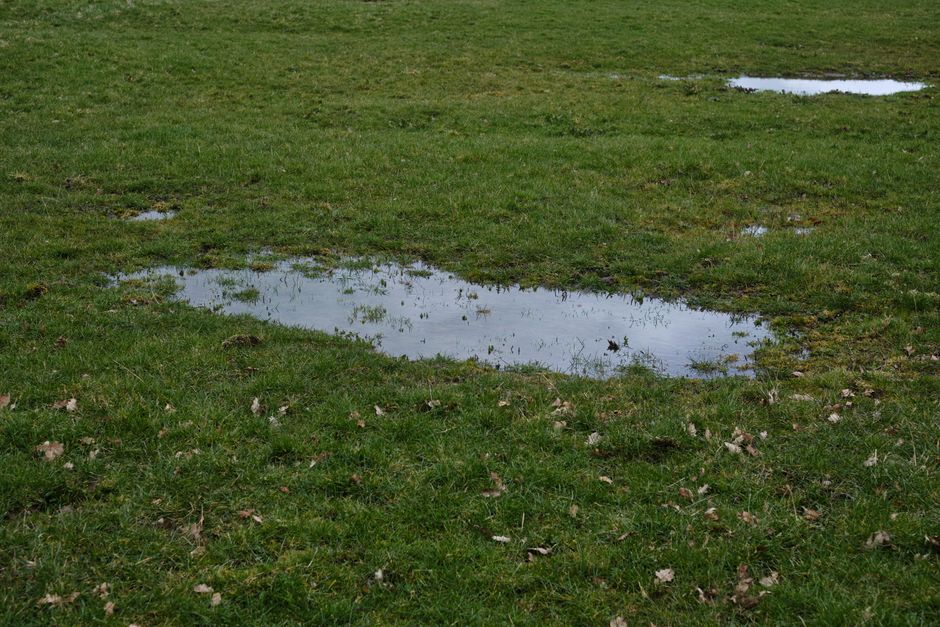
Here is a realistic example drawn from the kind of garden situation that comes up often. A modest UK back garden had a lawn that looked patchy after winter. The middle section was thin from repeated use, the far edge stayed damp and mossy, and one side sat in the shade of a fence and a mature shrub. Nothing dramatic, but enough to make the whole space feel tired.
The homeowner did not want a full turf replacement. The priority was to make the lawn respectable again on a sensible budget, with no huge disruption. So the work was kept focused:
- debris and moss were removed from the surface
- thin areas were lightly aerated
- shallow low spots were levelled with dressing
- shade-tolerant seed was used in the darker section
- the more worn centre was overseeded with a hard-wearing mix
- watering was kept light but regular
The result was not instant, and that is worth saying. After a few weeks, the lawn looked less patchy and much more even. The shaded edge was still slower than the sunnier area, of course. That is the reality of British gardens; they do not all perform at the same speed. But the lawn became usable again, and the owner avoided the cost and mess of a complete relawn.
What made the difference was not a miracle product. It was matching the repair method to the actual conditions, then being patient enough to let it establish. A very unexciting answer, maybe. But honestly, those are the repairs that tend to last.
That kind of thinking also pairs well with other low-cost improvements, such as the ideas in these simple low-cost garden ideas and the broader framing from creating a wind-resilient garden paradise when weather exposure is part of the problem.
Practical Checklist
Use this before you start. It keeps the repair focused and stops the job drifting into unnecessary extras.
- Identify the main cause of the lawn damage.
- Check whether the worst area is shaded, compacted, wet, or heavily worn.
- Clear debris, thatch, and obvious weeds.
- Loosen the soil where it has hardened.
- Level shallow dips with suitable topdressing.
- Choose a seed or turf repair method that fits the site.
- Water gently and consistently after repair.
- Keep traffic off the repaired section while it establishes.
- Mow lightly once new growth is ready.
- Review the garden layout if shade, drainage, or access keeps causing damage.
If your garden also has dark corners where the lawn struggles, you might get a better overall result by rethinking the planting scheme around them. A bit of shade-friendly planting can reduce future lawn frustration. The garden should work with the site, not fight it.
Get a free quote today and see how much you can save.
Conclusion
A low cost lawn repair case study in a real UK garden shows something fairly reassuring: you do not always need a complete overhaul to get a decent result. Most of the time, success comes from careful diagnosis, modest but well-timed repairs, and practical aftercare.
If the lawn is thin, patchy, or worn in a few predictable places, there is a good chance a budget repair can restore the feel of the garden without draining your wallet. The important bit is matching the method to the problem. That is where the savings come from. Not cutting corners, just cutting out waste.
And if the job turns out to be bigger than expected, that is fine too. Better to learn that early than sink time and money into a fix that was never going to last. A good garden is built in stages, after all. One solid step at a time.
When the lawn starts to green up again and the ground feels less tired underfoot, the whole garden changes character. It sounds a bit sentimental, maybe, but it is true.
Frequently Asked Questions
What is the cheapest way to repair a lawn in a UK garden?
For many gardens, the cheapest effective fix is to clear the area, improve the soil surface, and overseed only the damaged sections. If the patch is larger or the ground is uneven, a thin topdressing can help seed establish more evenly.
Is overseeding better than re-turfing for a budget repair?
Often, yes. Overseeding is usually more affordable and works well when the lawn still has a fair amount of healthy grass. Re-turfing makes more sense when large sections are gone or you need faster visual coverage.
When is the best time to repair a lawn in the UK?
Spring and early autumn are usually the most reliable windows because temperatures are milder and the soil tends to support growth better. That said, local conditions matter. A sheltered, damp garden will behave differently from a windy, exposed one.
Can a lawn recover if it is patchy and full of moss?
Yes, sometimes it can. But moss often points to deeper issues such as shade, compaction, poor drainage, or low fertility. If you only remove the moss without fixing the cause, it usually comes back.
How long does a low cost lawn repair take to show results?
Small improvements can appear within a few weeks, but real establishment takes longer. Grass seed needs time, moisture, and protection from heavy use. Rushing the process is a common reason repairs fail.
Do I need special seed for shady areas?
Usually, yes. Shady parts of a garden often need a more suitable seed mix than sunny areas. If trees, fences, or hedges block light, using the same seed across the whole lawn can lead to uneven results.
What causes a lawn to fail after winter in the UK?
Common causes include wet weather, compaction, fungal stress, moss build-up, and foot traffic on soft ground. Winter can leave the lawn looking worse than it really is, but the underlying damage still needs attention.
Can I repair a lawn myself, or should I hire help?
You can handle many small repairs yourself if the problem is simple and the area is manageable. If you are dealing with drainage, persistent shade, large damaged patches, or repeated failure, professional help can save time and prevent a false economy.
How do I keep a repaired lawn from failing again?
Keep mowing sensible, avoid overwatering, feed lightly when needed, and pay attention to shade and traffic patterns. If one corner always struggles, it may need a different approach rather than the same treatment every year.
Is lawn repair worth it for a small garden?
Usually, yes. In a small garden, even modest repairs can make a big visual difference. Because the area is compact, you can often improve the whole space without major expense.
Will a cheap lawn repair look patchy forever?
Not if the repair is done well and the aftercare is consistent. There may be a short transition period while new growth settles, but a patient, well-prepared repair can blend in nicely over time.
What should I ask for if I want a quote for lawn repair?
Ask what the assessment includes, whether soil improvement is part of the work, what seed or turf method is proposed, and how aftercare will be handled. If you want a clearer picture of scope and price, start with pricing and quotes and then follow up through the contact page.